
John Harlim '06
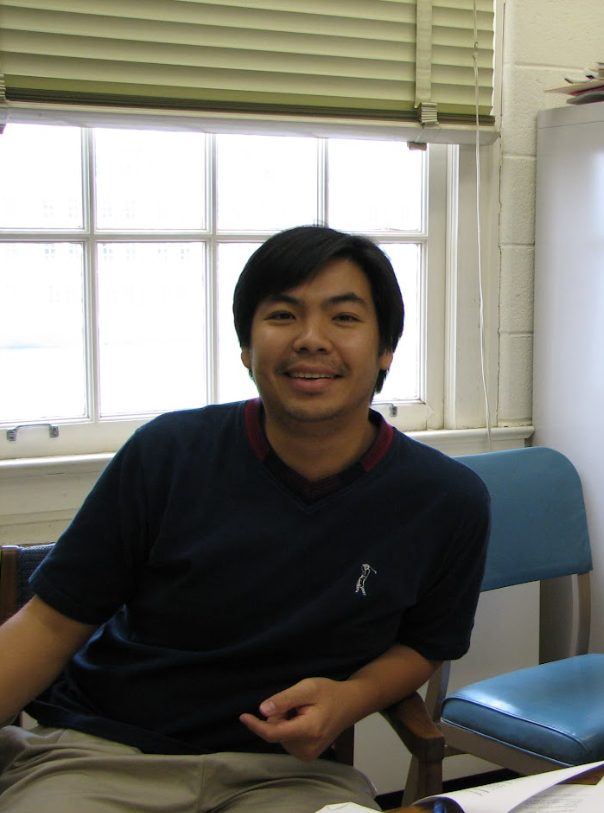 Current Position: Professor of Mathematics, The Pennsylvania State University
PhD Dissertation Title: Errors in the Initial Conditions for Numerical Weather Prediction: A Study of Error Growth Patterns and Error Reduction with Ensemble Filtering
PhD Advisor: Brian Hunt
Application Area (during AMSC studies): Atmospheric Sciences
What is your current position? How did you come to know about this position, and what do you like about it?
I have been a Professor of Mathematics, jointly appointed in the Institute for Computational and Data Sciences at Penn State, since 2013. At Penn State, I can pursue my passion as an applied mathematician to develop numerical algorithms for practical scientific computing problems arising in engineering and the applied sciences and study their convergence properties. Penn State’s strong research infrastructure and collaborative environment foster interdisciplinary work, enabling me to stay engaged with emerging and intellectually stimulating problems in modeling and scientific computing.
 What are your favorite memories of your graduate school experience? What about from the AMSC program specifically?
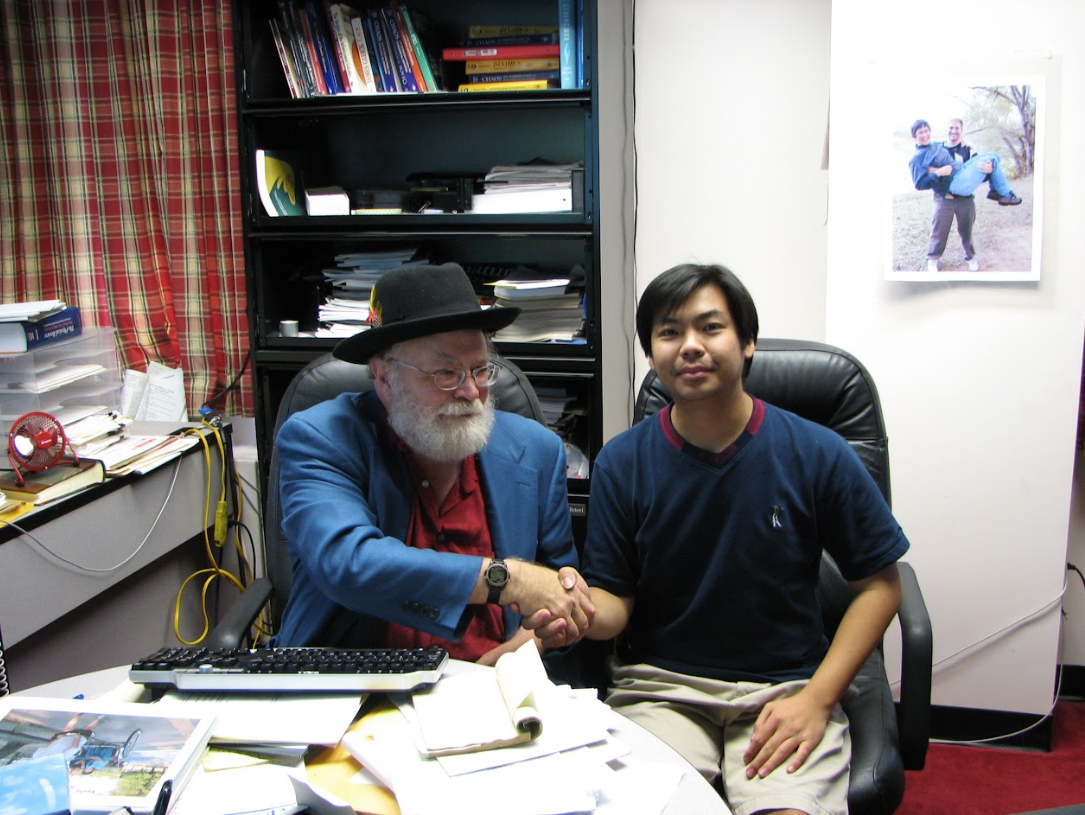
At the time, I was an international student, adjusting to life in the U.S., and I wasn’t the most well-prepared student academically. Having a super-helpful cohort of graduate students to discuss research problems with, in addition to having them teach me how to use High Performance Computers (I believe they mostly helped with debugging my problems), made an enormous difference. One of the weekly ritual activities was to attend the Chaos Group’s pizza talks, even if I only understood a few minutes of the presentation. The AMSC interdisciplinary program was very attractive to me as I got to learn some atmospheric sciences. Learning meteorology was fun, but confusing. For example, I am always slow in differentiating westerly wind and wind that moves from west to east. Those experiences helped me grow, both intellectually and personally.
In what ways did the AMSC program help prepare you for your current position?
I benefited enormously from the world-class mentorship of the AMSC faculty. Watching how boldly and creatively my professors approached research problems was truly eye-opening. At the time, I was puzzled when they would say, “I don’t understand this,” or “I don’t understand that.” I had always assumed that professors were supposed to know everything about their subject. Now I understand completely. Once a problem is fully understood and solved, it becomes less interesting. What truly drives research are the questions we do not yet understand and the problems we do not yet know how to solve. My own approach to tackling problems and how I mentor my graduate students and postdoctoral scholars has been deeply shaped by the mentorship I received.
What advice would you give to current students?
Attend seminars regularly and pay attention to what makes a talk effective or ineffective. In either case, use these observations to improve your own presentations. It is important to give good talks, as your future employers may well be in the audience. Read as much as you can and stay focused. Keep a written record of your weekly progress and setbacks. This habit will help you better understand the challenges you face and, more often than not, spark new ideas.